Externally-Owned Accounts (EOAs)
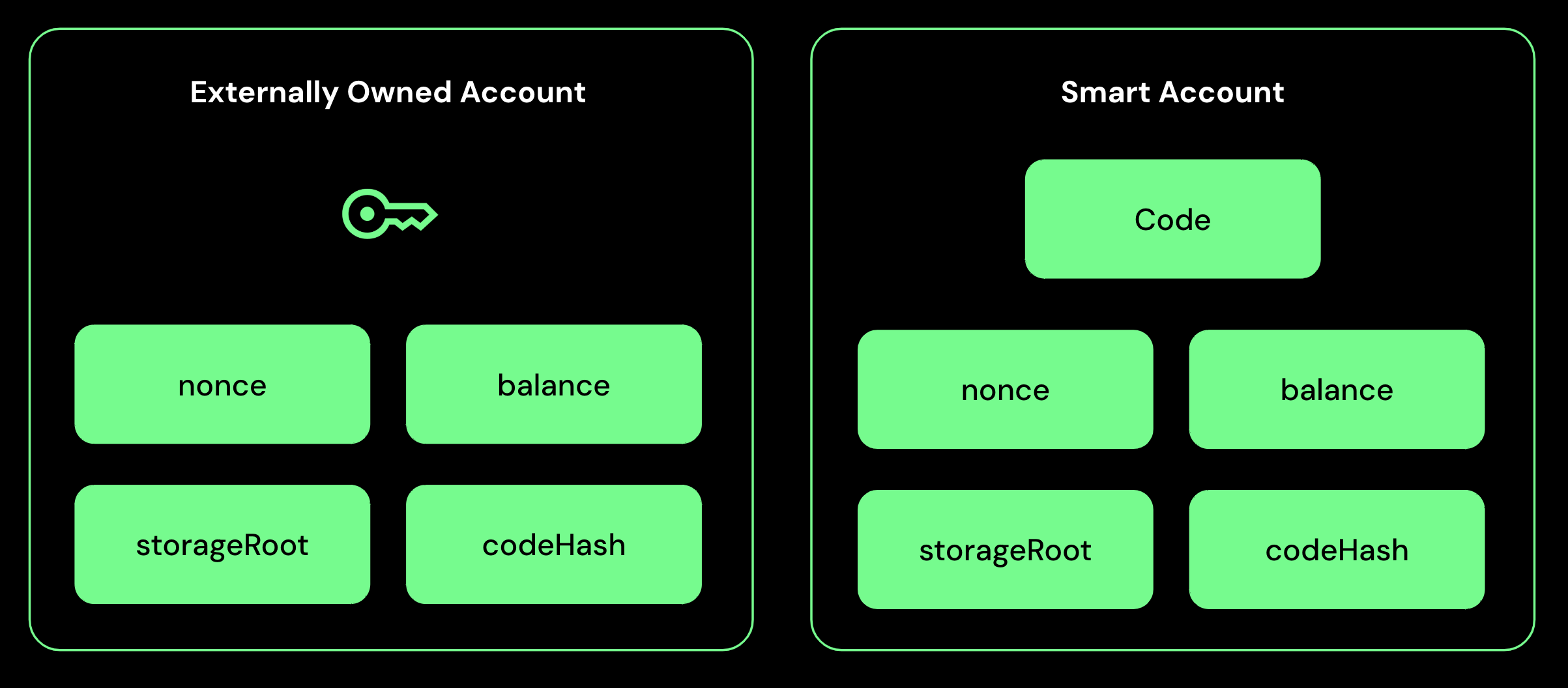
Externally-Owned Accounts (EOAs) are the traditional type of Ethereum account. They are controlled by a single private key, which is used to sign transactions and messages. Anyone with access to this private key has full control over the account. As a result, EOAs have a single point of failure: if the private key is lost or compromised, the funds and permissions associated with the account are lost as well.Smart Accounts
The second type of Ethereum account is the Smart Account, also referred to as a smart contract account. Like EOAs, smart accounts:- have a unique Ethereum address
- can receive funds
- can interact with other contracts
Smart accounts do not rely on a single private key. Instead, on-chain smart contract logic defines who can execute transactions, under which conditions, and how they are validated. Because this logic is programmable, smart accounts can support advanced features such as:
- multi-signature authorization
- fine-grained access control
- transaction batching
- account recovery mechanisms
- custom execution rules
EOAs vs. Smart Accounts
Safe Smart Account
A Safe Smart Account is a smart account with multi-signature security at its core. It is designed to be both secure by default and highly extensible, making it suitable for managing funds and executing transactions across Ethereum and other EVM-compatible networks. The long-term vision for Safe Smart Accounts is to serve as the standard account abstraction layer for smart contract–based wallets, making the benefits of Account Abstraction accessible to both users and developers.Design Principles
The architecture of Safe Smart Accounts follows two core principles:Secure by default
Safe uses a multi-signature model where a configurable threshold of owners must approve a transaction before it can be executed. This provides strong security guarantees without requiring trust in additional components such as modules, guards, or fallback handlers.Maximum flexibility
Safe supports:- Modules, which enable alternative execution patterns beyond multi-signature
delegatecall, allowing Safe to execute logic defined in external contracts
Features
High security
Safe’s multi-signature functionality allows you to define:- a list of owner accounts
- a threshold number of approvals required to execute a transaction
- EOAs
- other smart accounts
- passkeys or other authentication mechanisms
Advanced execution logic
Safe supports complex execution patterns through Safe library contracts. A common example is batched transactions, where multiple Ethereum transactions are grouped and executed together. This allows users to approve a single transaction instead of signing many individual ones.Advanced access management
Safe can be extended using Safe Modules, which enable fine-grained access control. Examples include:- Recovery modules that restore access under predefined conditions
- Allowance modules that grant limited execution rights, such as daily spending limits for external accounts
Token callback support
Many token standards require wallet contracts to implement callbacks.Safe supports token callbacks for standards such as:
- ERC-721
- ERC-1155
Sponsored and token-paid transactions
Normally, Ethereum transactions require ETH to pay gas fees. Safe enables alternative payment models, including:- paying gas fees with supported ERC-20 tokens
- fully gasless transactions where a third party sponsors the fees
Architecture
Safe Singleton Factory
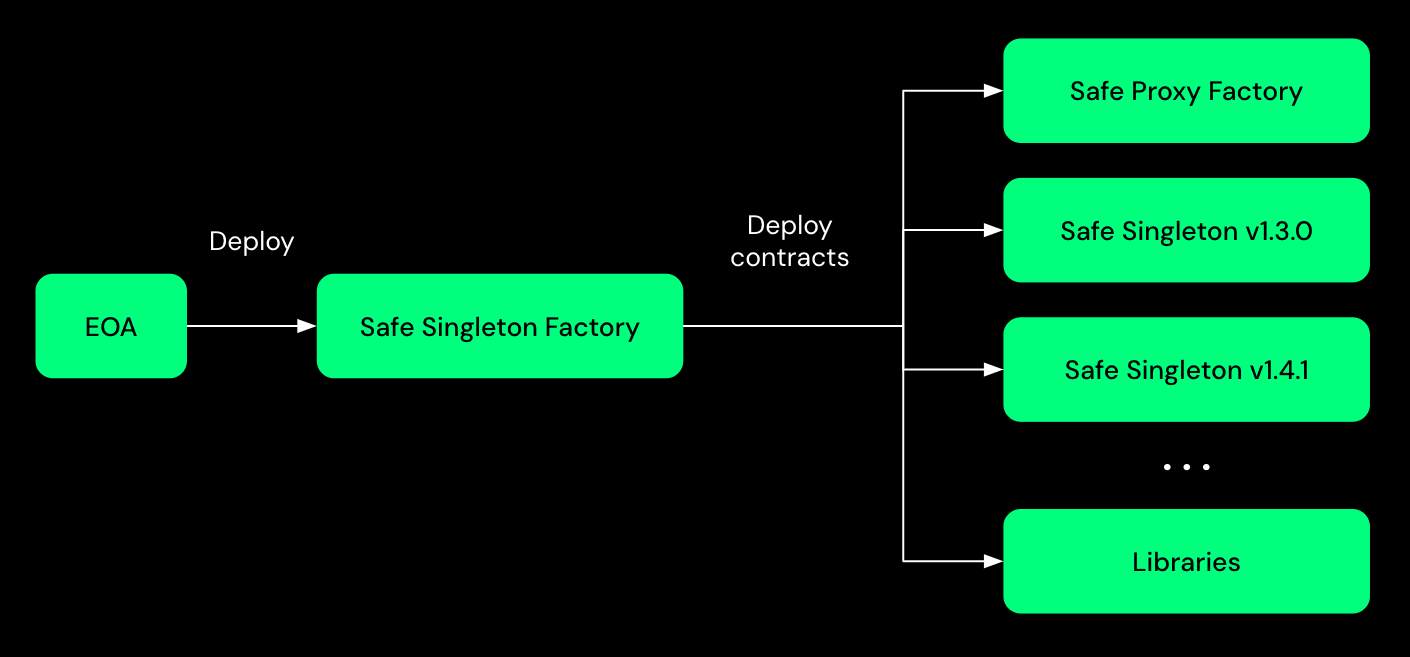
The Safe Singleton Factory deploys Safe-related contracts and enables deterministic contract addresses across different networks. This allows Safe Smart Accounts and their proxies to be deployed at the same address on multiple chains. See also:Safe Proxy Factory
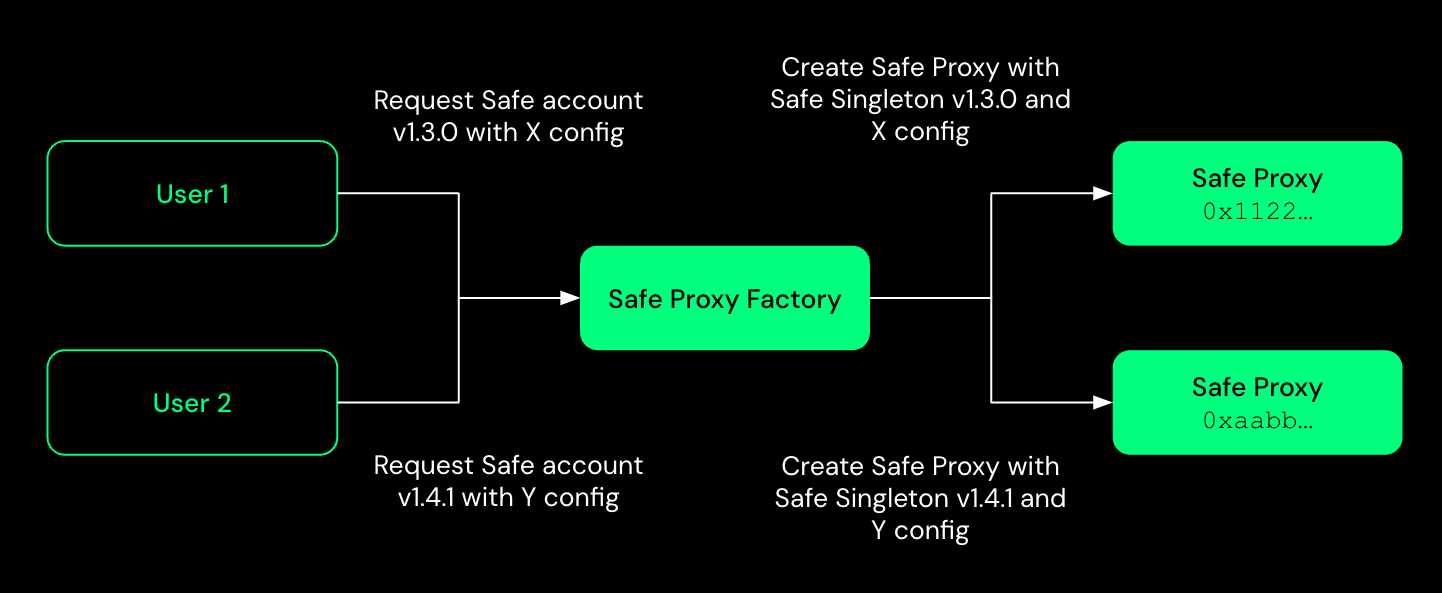
The Safe Proxy Factory provides a convenient way to:- deploy a Safe proxy
- point it to a Safe singleton
- execute the initial setup
Safe (Singleton)
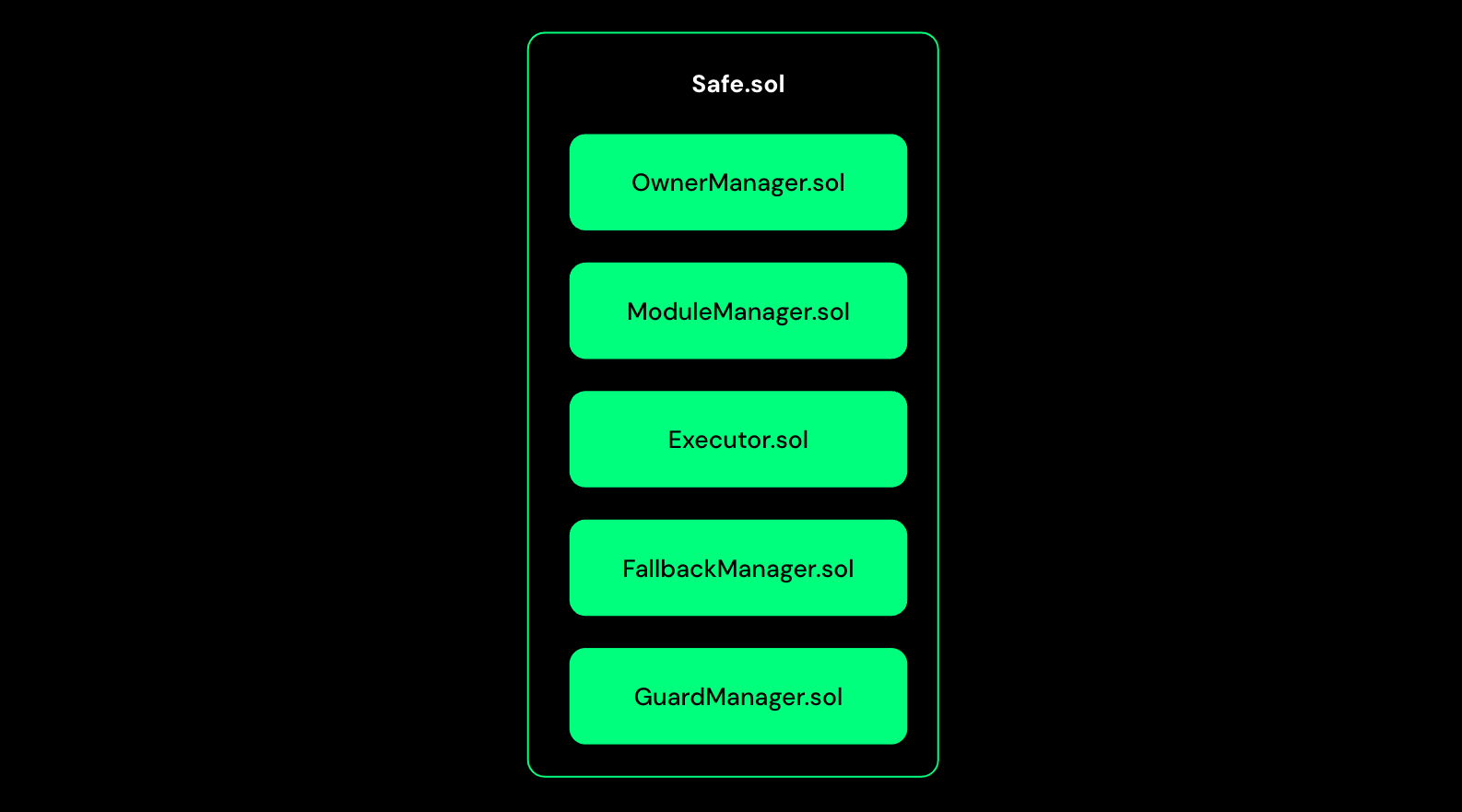
The Safe contract is a singleton that contains the core logic for:- signature verification
- transaction execution
- owner management
- module management
- fallback handling
- guards
delegatecall.
There are two variants:
- Safe (mainnet and compatible chains)
- SafeL2, which emits additional events for L2 chains that do not support tracing
For historical reasons, both variants are often referred to simply as “Safe”.The diagram below shows the main components of the Safe contract:
Owner Management
Safe supports multiple owners per account. TheOwnerManager.sol contract enables:
- adding, removing, and replacing owners
- changing the approval threshold
- retrieving the current owner list
Module Management
Modules extend Safe functionality while keeping the core contract minimal. They can, for example:- allow transaction execution without collecting all signatures
- enable alternative authorization schemes
Executor
The Executor component contains the logic for executingcall and delegatecall operations to external contracts.
Fallback Manager
Fallback functions are executed when a function selector does not match any defined function. Because EVM contracts are limited to 24 KB in size, Safe uses a Fallback Manager to:- delegate fallback logic to a separate contract
- extend functionality without increasing the core contract size
Guard Management
Guards define additional checks that run before and after transaction execution. The Guard Manager allows guards to be added, removed, or replaced. Guards are security-critical: a faulty or malicious guard can block transactions or lock funds. Events are emitted whenever a guard is updated.Safe Proxy
A Safe Proxy is a lightweight contract that delegates all calls to the Safe singleton. Using proxies significantly reduces deployment costs, since the proxy’s bytecode is much smaller than the full Safe contract.